


QR codes in marketing?
How to use them and their benefits
Today, marketing matters as much as production. It is essential to keep your production and marketing strategies up to date and to stay effective. This is where digital technologies make the difference. Thanks to their dynamic nature, QR codes offer a clear advantage: they provide easy access to information and are a major awareness tool in digital marketing.
These small, versatile and smart squares may look insignificant, but they hold great potential for your business. Scanning with a smartphone is instant: in a few seconds, you capture the attention of your potential customers.
You can shrink a QR code down to 1 cm. You can use it on all kinds of signs, add it to your advertising materials, print it on your business cards or display it on your product labels. You’ll even find it on the stickers on fruit.
Scan statistics measure your marketing performance. You can see how many people scanned the QR code, from which locations and at what times you get the most interactions. This data lets you optimize your campaigns and get better results.
Goals of QR codes in marketing and how they are used today
In marketing, the primary role of QR codes is to connect the physical and digital worlds to enrich the customer experience and strengthen engagement with the brand. Consumers get instant access to information; businesses measure the performance of their campaigns and better understand customer behavior. QR codes also turn traditional marketing materials into interactive experiences and let brands build direct, measurable communication with their customers. In addition, they reduce printing costs, make content easy to update and help use the marketing budget more efficiently.
Today, QR codes are used very widely in business and advertising. Digital menus in restaurants and cafés, product information and mobile payment in retail have become commonplace. Digital ticketing and registration at events, as well as virtual tours in real estate, are also growing. QR codes added to packaging, print ads and billboards take users to promotional pages, videos or social media. Finally, you’ll find them on business cards for saving a contact, in factories for quality control and stock tracking, and in museums and galleries for interactive tours. This variety makes QR codes an essential part of modern marketing.
Where QR codes are used
QR codes in outdoor spaces and shopping malls
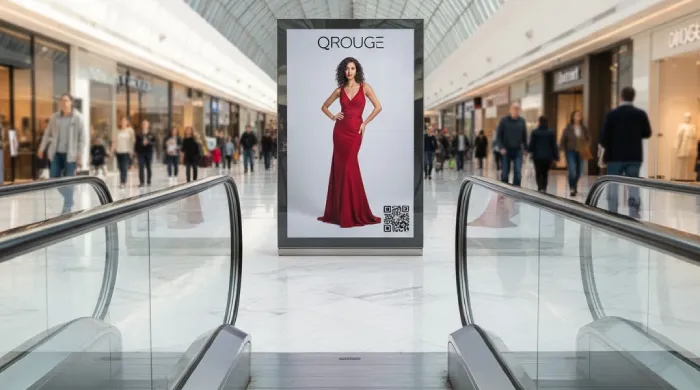
Shopping malls and outdoor complexes are places where QR technology is especially effective. In these large spaces, visitors need help finding their way, getting information and accessing special offers. QR codes meet this need: they improve the visitor experience and give stores valuable customer data. Placed at entrances, on floor plans and in store directories, they help visitors quickly find the store they are looking for.
In outdoor complexes, QR codes are used more creatively. Signs on the plants and trees in green spaces, architectural information on historic buildings, explanations of interactive art installations: everything opens with a scan. You can also easily offer access to the show schedule, contactless menus in restaurants and cafeterias, Wi-Fi in rest areas, safety rules in playgrounds and emergency directions.
These places generally use URL QR codes, as well as business card QR codes, social media QR codes and product QR codes.
QR codes in the food and beverage industry
Food service has become one of the industries that benefits most from QR codes. Especially since the pandemic, contactless menus have spread rapidly and have become a standard service in restaurants and cafés. With QR codes on the tables, customers browse the whole menu without touching a physical menu and get instant access to ingredients, allergens and calorie counts. Dynamic menus also let restaurants update daily specials, seasonal products and sold-out dishes in real time. Venues that offer multilingual menus to foreign tourists significantly improve customer satisfaction. Finally, handling orders and payment via QR code speeds up service and optimizes staffing needs.
Fast food chains and cafés make effective use of QR codes in their loyalty programs and marketing campaigns. By scanning the codes on tables or packaging, customers collect points, enjoy exclusive discounts and quickly discover what’s new. QR codes also make it possible to collect customer reviews, run online surveys and boost social media engagement. In contract catering, they organize information about dishes, order tracking and invoicing. For special products such as wine or coffee, customers discover the production story, origin and tasting notes with a scan. In delivery and takeaway, ordering by QR code reduces phone calls, improves operational efficiency and speeds up service.
These venues generally use menu QR codes, URL QR codes and social media QR codes.
QR codes on vehicles
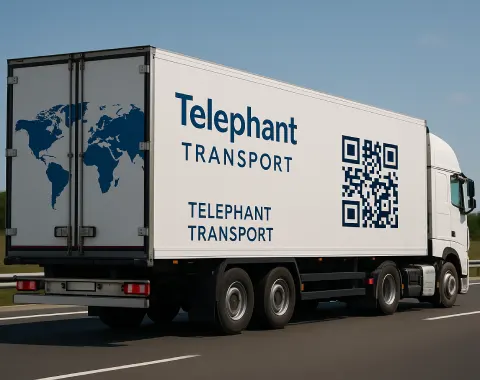
QR codes on vehicles are one of the most dynamic and effective applications of mobile marketing. Placed on company vehicles, delivery vans, taxis and public transport, they become true mobile billboards that reach a wide audience. Delivery and service vehicles pass through hundreds of places every day: brand visibility increases and the attention of potential customers is easily captured. When they scan the code, users are immediately taken to the company’s website, a campaign page, contact details or an online ordering platform. This makes it a cost-effective marketing strategy, especially for local businesses and online stores. Companies that manage a fleet can also use a different QR code for each vehicle to measure engagement and optimize their routes.
In public transport, the QR code serves passengers while offering advertisers a powerful medium. Placed inside and outside buses, trams and subways, the codes give quick access to route information, timetables, city guides and emergency instructions. In advertising campaigns, QR codes on vehicles catch the attention of drivers and pedestrians, especially in traffic jams, and strengthen brand awareness. On the rear window or doors of taxis and ride-hailing cars, they are used to download an app, join a loyalty program or rate the service. On car-sharing platforms, QR codes are even the basis of the locking and unlocking systems. These uses show that QR codes on vehicles are highly valuable, both for operational efficiency and for marketing.
Vehicles generally use business card QR codes, URL QR codes, product QR codes and social media and multi-link QR codes.
QR codes on product labels
QR codes added to product labels let brands build a direct, digital connection with the consumer. By scanning the code, users access the product’s origin, ingredients, instructions for use or warranty registration in a few seconds. This method builds transparency and trust, especially in food, cosmetics and textiles, while making the best use of the space on the packaging.
For brands, QR codes are not just for sharing information: they are also opportunities for interaction. Codes that lead to the brand’s website, social media or special campaigns digitize the shopping experience and strengthen loyalty. With a dynamic QR code, you can update campaign content or links whenever you like: every product label becomes a living communication channel for your brand.
Product labels mainly use product QR codes and URL QR codes.

QR codes at online and in-person events

At events, the QR code is an innovative solution that improves the attendee experience while simplifying organization. Online, the speaker’s contact or company details, session links, presentation materials or certificates of attendance are shared quickly via QR code. With a scan, attendees access the content, fill in a registration form or add the event to their calendar. This method prevents access confusion at busy webinars, launches or trade shows and supports digital transformation.
At in-person events, QR codes strengthen both information sharing and interaction. At a meeting or trade show, sharing a person’s or company’s details via QR code is a modern alternative to exchanging business cards. By scanning the QR code shown on screen, attendees instantly access the speaker’s contact details, company profile, social media or introduction videos. Access control, check-in, session tracking and survey participation can also be automated with QR codes. Brands enrich the visitor experience and get measurable engagement data.
Events mainly use business card QR codes and URL QR codes.